History
Across generations and centuries, the skill of some and the innovations of others gradually made Château Margaux a wine of excellence; one need only recall the progress made under the steward Berlon in the early 18th century.
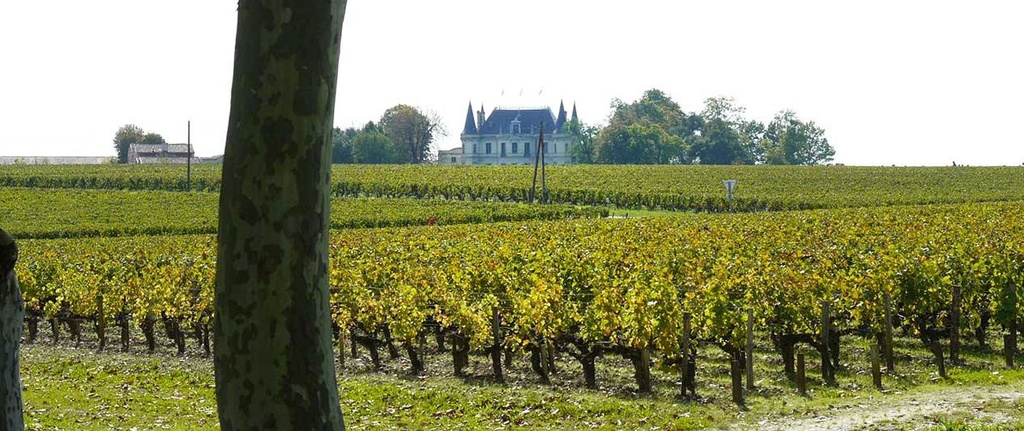
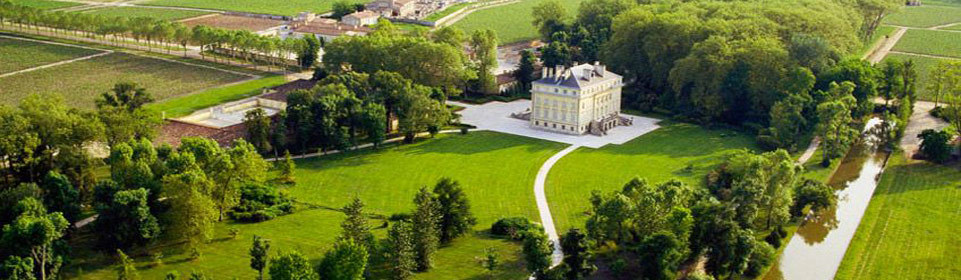
In 1705, the London Gazette announced the first auction of Bordeaux Grands Crus: 230 barrels of "Margose"! The 1771 vintage was the first "claret" to appear in a Christie's catalogue. Bertrand Douat, Marquis de la Colonilla, acquired the estate and judged the existing manor unworthy of a vineyard of its fame. In its place, he built the house we see today, commissioning Louis Combes, Bordeaux's leading architect of the day. Combes produced his masterpiece at Margaux. Often nicknamed the "Versailles of the Médoc", the château is one of the rare examples of the neo-Palladian style in France.
La Colonilla's children had no interest in the estate and sold it to Alexandre Aguado, the first banker to acquire a great Bordeaux château. His fortune was already immense, and Château Margaux was not a way to increase it, but rather an elegant and pleasant place to live.
Emperor Napoleon III did the great red wines of the Médoc proud service by organising the Second Universal Exhibition in Paris in 1855, an opportunity to celebrate French products, including the prestigious wines of the Médoc.
In 1879, Emily Macdonnel, a Scottish lady-in-waiting to Empress Eugénie and wife of Aguado's son, sold the château to Count Pillet-Will. The Médoc was unprofitable at the time, hit almost simultaneously by the great global recession and fungal vine diseases.
Then Fernand Ginestet and his son Pierre entered the scene. Fernand had built his
fortune in the wine trade. One of his friends, the mayor of Saigon and a wine importer, sent him the funds he needed to buy the estate. The Ginestet family only acquired it outright around 1950.
In 1977, André Mentzelopoulos bought the estate. The Ionic columns adorning the château's peristyle reminded him of his native Greece, and his tremendous intellectual sharpness made him grasp the scale of the work needed for Margaux to regain its place as a First Growth, the only rank worthy of it.
The wine world, so alarmed by the arrival of "a Greek in the Médoc", was all the more concerned by André Mentzelopoulos's death. This paradox is explained by the fact that he had won over even the most sceptical with his energy and foresight, which, in the service of his passion for Château Margaux, restored the quality of the wine and the reputation of the estate with almost spectacular speed.
The history and fame of Château Margaux stem as much from the genius of the place as from the contribution of the men and women who have served it for five centuries. But no owner has probably played such a decisive role, in so short a time, as André Mentzelopoulos, who bought the estate in 1977 and would be 100 years old today.
The early 21st century
Bordeaux wines are enjoying unprecedented success. The whole world seems to have its eyes fixed on Bordeaux, and demand keeps growing. This prosperity, along with the rise of many other wine regions worldwide, has made the market more competitive and underscored its unique position: a Premier Grand Cru Classé in 1855, blessed with a terroir shaped over the centuries.